By Dr. Christine Powell🧩
Let me be completely transparent for a second…I used AI to help me write the early drafts of this post. And honestly, that feels a bit meta considering the exact topic we need to talk about.
For the past several months, I’ve been deep in research and preparation for a presentation at the 11th Annual Global Teaching Dialogue, hosted virtually by the U.S. Department of State’s Bureau of Educational and Cultural Affairs. My session, titled “Mind Over Machine: Executive Functioning Skills in the Age of AI,” focused initially on global educators helping students navigate this technological shift.
But something interesting happened right after I presented.
While the presentation centered on classrooms, afterwards, I was flooded with feedback & follow-ups from professionals, parents, and a few educators in higher education programs, who were asking very specific questions. The message I was receiving…This isn’t just about students. Adults are wrestling with the exact same mental autopilot in their personal and professional lives. We are all asking the same urgent question: Where do we draw the line, and how do we think for ourselves before handing our Brains & cognitive steering wheels, over to an AI algorithm?

As an educational therapist, my life’s work is rooted in how the brain manages information, planning, and execution. When we let technology handle all our heavy thinking, our executive functions…our brain’s internal command center for working memory, cognitive flexibility, and organization…start to atrophy from lack of use.
If you are managing a demanding career and trying to keep your edge in a fast-moving, AI-saturated workplace, here are three practical strategies that actually help adults protect their cognitive resilience:
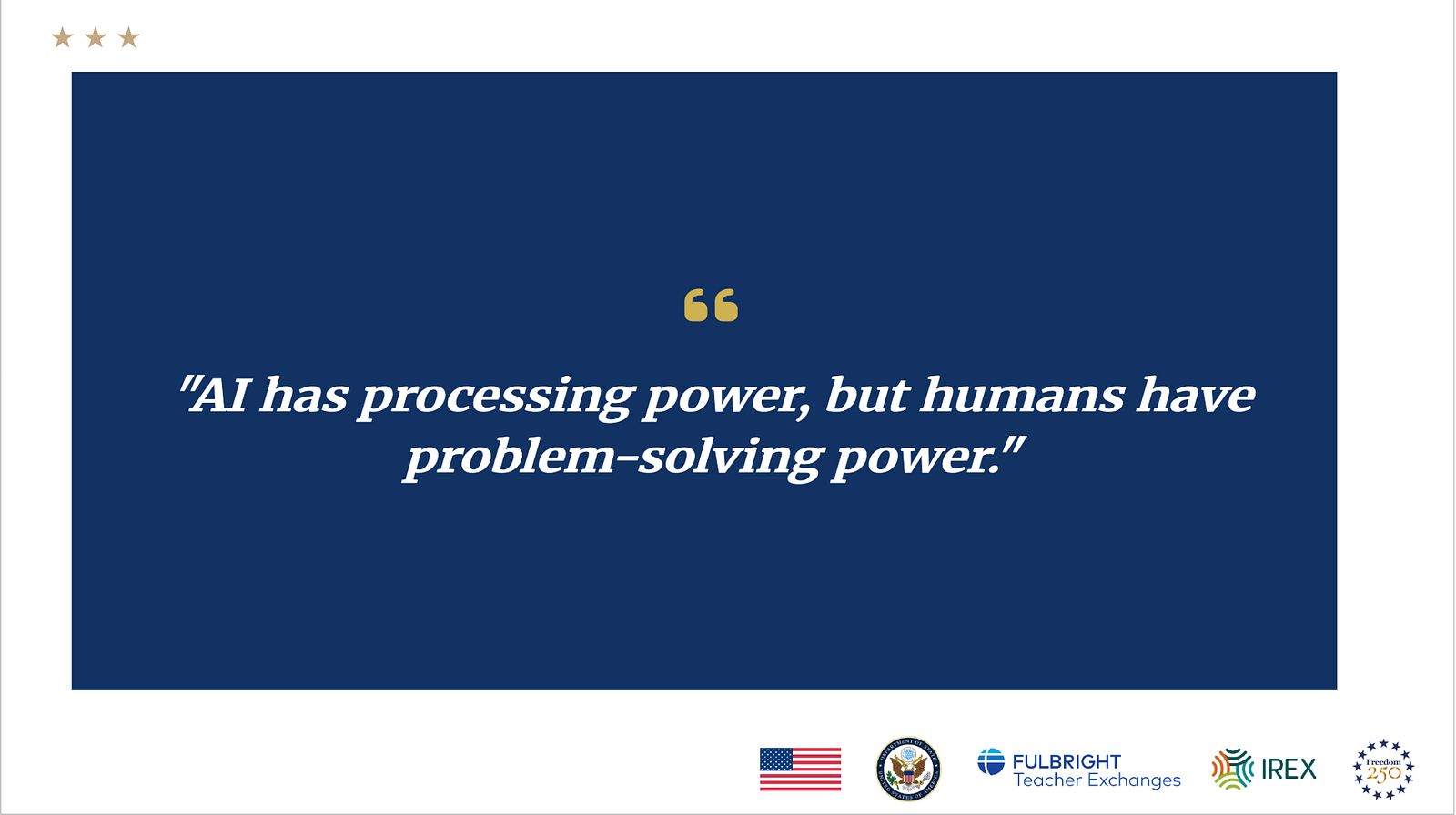
Before you open a chat window to draft that critical email, project brief, or strategic proposal, force yourself to spend five minutes writing a messy, unstructured brain-dump on paper. Let your biological brain do the initial messy work of connecting dots. Use AI to refine, polish, and optimize your work after your own cognitive foundation is laid.
Efficiency is great, but constant convenience erodes our frustration tolerance. Carve out specific parts of your workday where you deliberately tackle a complex problem, organize a messy dataset, or brainstorm a strategy completely unaided. Rebuilding your cognitive stamina requires embracing a little bit of productive struggle without reaching for an instant algorithmic shortcut.
Take a hard look at your daily workflows. Are you using AI to enhance your thinking, or to replace it entirely? Notice the moments you immediately default to an algorithm when faced with ambiguity. By bringing metacognition — thinking about your own thinking — back into your daily routine, you reclaim intentional control over your focus and decision-making.
Protecting our cognitive endurance in a digital world requires a deliberate shift in how we work. We have to be just as intentional about safeguarding our mental muscle as we are about boosting our productivity.
I dive much deeper into these concepts and frameworks in my session from the Global Teaching Dialogue. You can watch the full presentation here: https://youtu.be/UED1gWo5LKc
How are you seeing AI impact your own focus, planning, and problem-solving at work? Let’s talk about it in the responses. If you found this helpful or know someone who might benefit…pass it on.